Whether you’re building customer relationships from scratch or enhancing an existing engagement strategy, a successful loyalty program is one of the most effective ways to drive repeat business and long‑term growth. Today’s customers expect personalized rewards, tailored offers, and experiences that recognize their value — not just transactional incentives. Loyalty programs help businesses build deeper emotional connections with their audience, leading to higher retention, increased spend, and enthusiastic brand advocacy.
In this guide, we integrate your original content and expand on it with strategic insights, practical steps, and real‑world examples to help you design, launch, and optimize a loyalty program that works.
Why do companies use loyalty Programs?
Loyalty programs are a win‑win for both businesses and customers. For businesses, they help drive repeat sales, increase customer lifetime value, and build brand affinity. For customers, they offer exclusive perks, recognition, and a sense of belonging. When done right, happy customers become brand advocates, spreading the word and bringing in more loyal shoppers.
Let’s explore why these benefits matter, especially in today’s competitive market:
- Repeat Sales: Programs incentivize customers to return, increasing purchase frequency.
- Lifetime Value: A loyal customer’s total spend over time is often significantly higher than that of a first‑time buyer.
- Brand Advocacy: Satisfied program members share their experience with peers — lowering acquisition costs and reinforcing trust.
Stage 1: Pre‑Implementation — Setting the Foundation for Success
Before launching your program using Salesforce Loyalty Management or any engagement platform, you must set a solid foundation:
Lay the Groundwork and Assess Customer Data
When you need to lay the groundwork and assess all customer data sources from CRM to POS systems, ensuring top notch data quality. You also need to define your goals and what you want to achieve with your loyalty program. Ask yourself:
- Who are your most valuable customers?
- What behaviors or actions do you want to encourage?
- What are the business objectives, retention, engagement, or upselling?
Ask strategic questions to clarify objectives:
- Are you aiming to increase repeat purchases, reduce churn, or boost average order value?
- What customer actions do you want to encourage — reviews, referrals, social engagement, or frequent visits?
By answering these, you shape a loyalty program that aligns with measurable business outcomes.
Stage 2: Program Design — Choosing the Right Model
The original blog introduces three key program models: points‑based, tiered, and gamified experiences. Let’s expand on each:
Points‑Based Programs
Customers earn points for specific activities — such as purchases, reviews, social shares, and referrals — which can be redeemed for discounts, products, or experiences. This model is simple to understand and widely effective.
Example: A customer earns 1 point for every $1 spent. After 500 points, they receive a $25 discount.
Tiered Programs
Tiered rewards motivate customers to level up based on engagement. It reinforces ongoing participation.
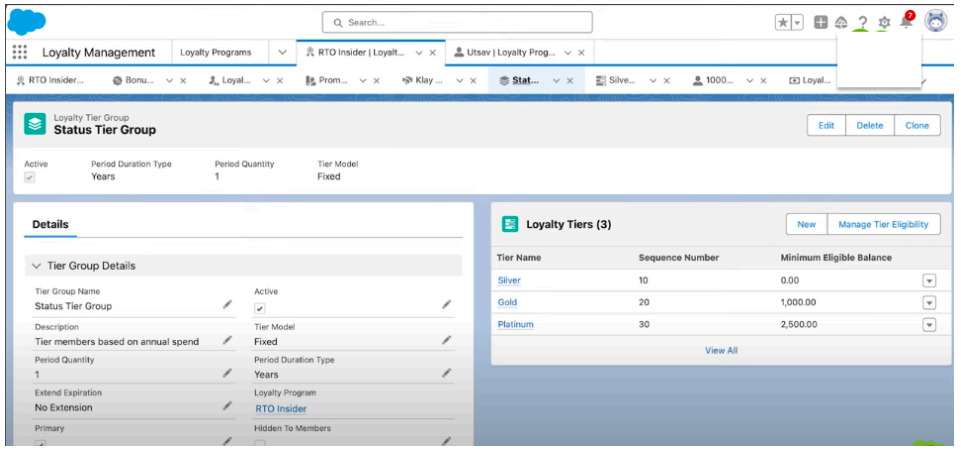
Example:
- Silver: Entry level with basic perks
- Gold: Mid‑tier with enhanced benefits
- Platinum: Top tier with exclusive privileges
Gamified Loyalty Experiences
Gamification introduces fun incentives — such as badges, challenges, and streak rewards — that increase engagement and make loyalty feel rewarding beyond just purchases.
Example: Award a badge for completing a series of actions like making 3 purchases in a month or referring friends.
Step-3 : Configure Points and Redemption Rules
You can also configure how customers will earn points from transactions to social interactions and set clear rules for redemption. In addition, you can opt for a partnership program, … Salesforce Loyalty Management also supports dynamic widgets … “View Active Vouchers”, “Refer or Remind a Friend”, “Transaction History”, “Join the Membership”.
After defining your structure:
- Set Earning Rules:
- Purchases
- Referrals
- Reviews or social engagements
- Purchases
- Define Redemption Rules:
What can customers trade points for? Discounts? Free products? Exclusive early access?
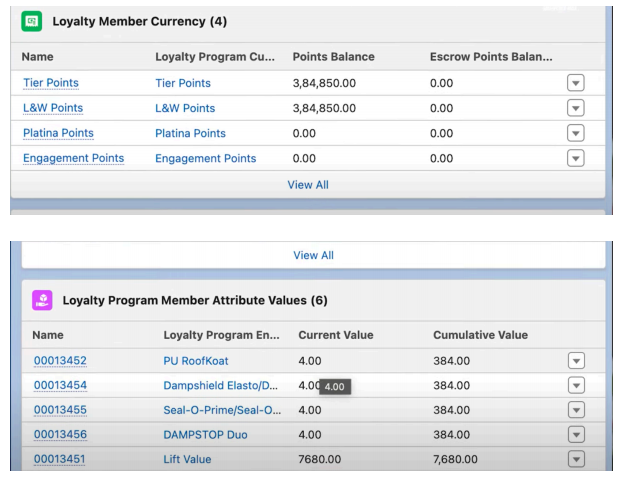
Widgets and Engagement Tools:
Use Loyalty Cloud widgets like:
- View Active Vouchers
- Refer or Remind a Friend
- Transaction History
These enhance engagement and streamline customer interactions.
Stage 4: Implementation — Turning Your Program Into Reality
Once your design is ready, implementation begins:
- Use Salesforce Loyalty Management or a comparable platform to configure the program.
- If unique business logic is required, custom APIs may be necessary.
- Create sandbox test environments to trial features like:
- Points earning
- Tier progression
- Reward redemptions
- Points earning
Thorough testing prevents UX issues that could harm adoption.
Stage 5: Deployment Strategy
The original blog emphasizes the importance of planning your deployment:
Final Stage: Deployment Strategy — Here the focus should be on the deployment strategy, checking everything from sandbox to production to minimize disruption. Monitoring is necessary after the launch … Member Engagement, Reward Redemption Rates, and Overall program effectiveness. … Remember: Your data is gold. Use it to continuously optimize your loyalty strategy for better results and long‑term success.
Key deployment tips:
- Move from Sandbox to Production Carefully: Ensure all rules and dependencies are mirrored.
- Monitor Key Metrics:
- Member engagement
- Reward redemption rates
- Lifetime customer value
- Member engagement
- Use Data for Iteration: Track customer behavior to refine rules and rewards over time.
Best Practices to Maximize Loyalty Program Success
✔ Start Small, Scale Later: Launch with core features and expand.
✔ Segment Your Audience: Tailor rewards for high‑value vs. occasional customers.
✔ Communicate Clearly: Use email and in‑app messaging to promote program benefits.
✔ Automate Engagement: Trigger bonus points on birthdays or special events.
Conclusion
Building a successful loyalty program requires strategy, solid data, and continuous iteration. By following the structured stages — groundwork, design, points configuration, implementation, and deployment — you can create a program that not only drives repeat business but fosters lasting customer relationships. With Salesforce Loyalty Management or similar tools, your program becomes scalable, data‑driven, and aligned with customer expectations.